石川竜一『ヨ』
Book Design:町口景
発行:赤々舎
Size:H282mm × W228mm
Page:104 pages
Binding:Hardcover
Published in June 2026
ISBN:978-4-86541-233-8
¥ 5,000+tax
国内送料無料!
About Book
“言葉では尽くせず、意味へ還元されず、それでも確かに立ち現れているもの。
それは、記号化されながらもなお尽くされず、知覚のうちに立ち現れ、他者として触れ、聖として震えをもたらすものの現れである。”(石川竜一)
石川竜一にとって、ポートレートは重要なテーマであり続けてきた。私たちは写真に写る人を見て、その人が誰であるのかを知ろうとする。年齢や性別、装い、表情、生活の痕跡から、その人について何かを読み取り、意味を与えようとする。しかし、そうした言葉や解釈を重ねても、なお残るものがある。細部まで克明に写し出されるほど、その人はむしろ、何者であるかという理解からこぼれ落ちていく。見えているのに、わからない。目の前の人は、自分の理解には回収しきれない他者としてそこにいる。
皮膚の湿度、身体に宿る緊張、筋肉の張り、視線の強さや揺らぎ。光が物に触れ、反射し、カメラへと届く。
写真に定着された物質の質感は、見る者の身体にも働きかける。物質的であると同時に、現象的であること。
客観としてそこにあるものが、見る者の主観に触れ、感覚を生じさせること。
石川はその経験を考えるなかで、主観的に経験される感覚の質「クオリア」へと向かい、さらに、畏怖や魅惑を伴う「聖なるもの」、説明することのできない他者性へと思考を重ねていく。聖性とは、誰かがあらかじめ所有している特別な属性ではない。見ることのなかで、不意に立ち上がる経験の質なのだ。
見られるものと見るもの。物質と感覚。客観と主観。そのあいだで、起きていること。写真に写る身体は、ただ観察される対象なのではなく、知覚の媒体となって見る者の身体へと触れてくる。そこには、言葉によって意味づけられるより前に、確かに現れている何かがある。
石川はそれを「∃」と記し、「よ」と読む。論理学では「存在する」ことを示す記号である「∃」を、石川はここで、「存在」にさえ先立つ「表し難い現れ」へと開いていく。それは何者かという分類からこぼれ落ち、言葉や記号によって尽くされることなく、それでも確かに、こちらに触れてくるものだ。
何が写っているのかではなく、なお、そこにあるもの。『ヨ』は、人を撮り続けてきた石川竜一が、写真に写るものと、それを見る者とのあいだに立ち現れる、名づけることのできないものへと触れようとする一冊である。
“量化記号 「 ∃ 」 は、数学や論理学において「〜が存在する」(少なくとも1 つ存在する)を意味する記号である。Exist(存在する)の頭文字 E を左右反転させた記号で、「存在記号」とも言われる。(中略)
写真は、世界に存在する何か( ∃ )を肯定している。人間が生きているということは、ジグソーパズルのピースのようにこの世界の一部を物理的な空間として構成していることでもあるからだ。
アナタハ イマ ココニ イル
アナタハ イマ ココニ イテ イイ
アナタハ イマ ココニシカ イナイ
石川竜一の写真は、人間存在を、生そのものを、ただひたすらに肯定しているのだ。“
稲葉俊郎(医師 医学博士 慶應義塾大学 SDM 特任教授)
本書 寄稿「絶対的な存在の肯定」より抜粋
ヨ
Ryuichi Ishikawa
Photographs are frequently open to interpretive readings ― what the photographic subject is, who the people are, what attributes define them, and what signs of a particular era or culture they embody. Objects in photographs can be endlessly described, classified, and interpreted through elements such as clothing, adornment, age, occupational identity, gender difference, and traces of lived experience. But what matters is what always appears within an image that cannot be fully accounted for by such readings. The moisture of the skin, the tension residing in a posture, the firmness of muscle and skin, the lightness of clothing, the shadow cast across an expression, the intensity or restraint in a gaze, and the slight differences in the way light falls all create different densities of perception.
Photography begins initially with the perceptual differentiation in light produced by the movement of photons. What photography records is not the world’s objects themselves, but rather the interaction between objects and light arriving as a distribution of photons whose differences are fixed as traces on film or an image sensor to create a photograph. Perception receives these differences and, in the cognitive process, generates meaning. But we must recognize that the process of cognition already overproduces meaning. Moreover, while linguistic interpretation lends depth to objects, it also constrains that depth to particular readings. Yet when viewing a photograph, the trembling beyond words, the inexplicable pull, or the feeling of being unable to look away is experienced not as meaning but as an encounter with the unknown that pierces the senses.
One concept at the core of religious experience is the numinous ― the experience of the sacred. It is not an object understood as an idol, but an experience of overwhelming otherness possessing the dual character of awe and fascination, which cannot be grasped by reason or reduced to moral interpretation. In his discussion of photographs of his mother, Roland Barthes develops the concept of punctum ― an intensely subjective response approaching a religious experience that a photograph can sometimes evoke in the viewer. Walter Benjamin argued that photography and mechanical reproduction destroy aura — the unique presence of an original work of art ― but this assertion paradoxically suggests that certain photographs can possess a powerful aura. The loss implied by “it-has-been” points to absence, yet the trace left behind proves the past reality. The presence of what has been lost, brought about through the suspension of time, disrupts the irreversibility of time’s arrow, and, through the threatening duality of absence and presence produced by the emergence of an improbable possibility, approaches the intense structure of the sacred.
However, once sacred experience is externalized, it transforms into charisma that acts as a social force to regulate communal life. The experience of otherness then becomes connected to the justification of regulation and domination within the community and contributes to the formation of social hierarchies. In the contemporary world, moreover, sacredness itself is worn away amid the flood of images. Photography transforms suffering into a commodity, renders the sacred ordinary, and numbs awe.
Sacredness, endlessly repeated, becomes a product, and photography, as a reproducible sign, cannot avoid becoming something circulated, exchanged, and consumed.
Nevertheless, within the experience of photography there remains a dimension that cannot be fully subsumed by signs or interpretation. Photographing a religious subject does not make the photograph itself sacred. Sacredness is not an attribute of the subject; it is qualia —the quality of experience as it arises within the viewer. Qualia refers to an irreducible quality of experience: the way the world manifests in consciousness, such as the redness of red or the painfulness of pain. In terms of photography, this is not a matter of what is depicted or how it can be interpreted, but rather how the presence of what is depicted appears within
the viewer.
Certainly, this quality of experience is subjective and arises within the self in a reflexive, ruminative manner. Yet when consciousness itself is understood as a phenomenon emerging from the continuous physical motion of the universe, qualia are no longer something private and sealed within the depths of the psyche; they connect the seen and the seer. The body captured in a photograph becomes not merely an object to be viewed but a medium of perception. It is a manifestation that reaches out and acts on the body of the viewer.
The emergence of self-awareness and the difference that appears as a phenomenon to be observed prevent the other from being fully subsumed by a system of symbolic interpretation. No matter how detailed a photograph is, no matter how meticulously its details appear, it can never become a fully explicable totality, nor does it complete our understanding of what has been photographed. A photograph shows its subject, but it does not allow it to be possessed; it always appears as something that remains beyond the viewer’s understanding. […]
The symbol ヨ in logic first appears only in relation to other symbols, as in ヨx. It is a quantifier that indicates existence through quantity, as in “there exists at least one x.” Ordinarily, when something is represented, x appears as the actual entity, while ヨ expresses quantity.
However, if ヨ indicates quantity, then quantity is a mass prior to quantification; once fixed, it can be transformed into motion as energy. If motion is the essence of the world, and if that essence is what we call phenomenon, then ヨ can be used to express a “manifestation difficult to articulate” that precedes existence. In order to distinguish this from its use in logic, I will read ヨ here as yo. […]
Photography does not merely present meaning or signs. It is a medium that preserves traces of ヨ (yo) that cannot be fully subsumed within signs. The fact that a person stands there exposes a singularity that escapes all classification. This is when photography does not simply encourage the consumption of signs; rather, it can become a catalyst that returns those signs from within the ordinary back to the side of existence. What lies at the core of photography is not what is depicted, but what still remains ― the appearance that is ヨ, neither exhausted by language nor reduced to meaning, yet undeniably manifest as presence.
– – – – – – – – – – – – – –
“The quantifier ∃ is a symbol used in mathematics and logic to mean “there exists” (at least one exists). Derived by reversing the initial letter E of Exist, it is also known as the existential quantifier. […]
Toshiro Inaba(Physician, Doctor of Medicine, Specially Appointed Professor, Keio University SDM)
Photography affirms the existence of things (∃) in this world. The life of a human being is also—like a piece of a jigsaw puzzle—a physical presence that forms part of the world.
You are here now.
You are allowed to be here now.
You are nowhere else but here now.
The photographs of Ryuichi Ishikawa wholeheartedly affirm human existence—life itself.”
Excerpt from the text “Affirmation of Absolute Existence”
Related Exhibiton
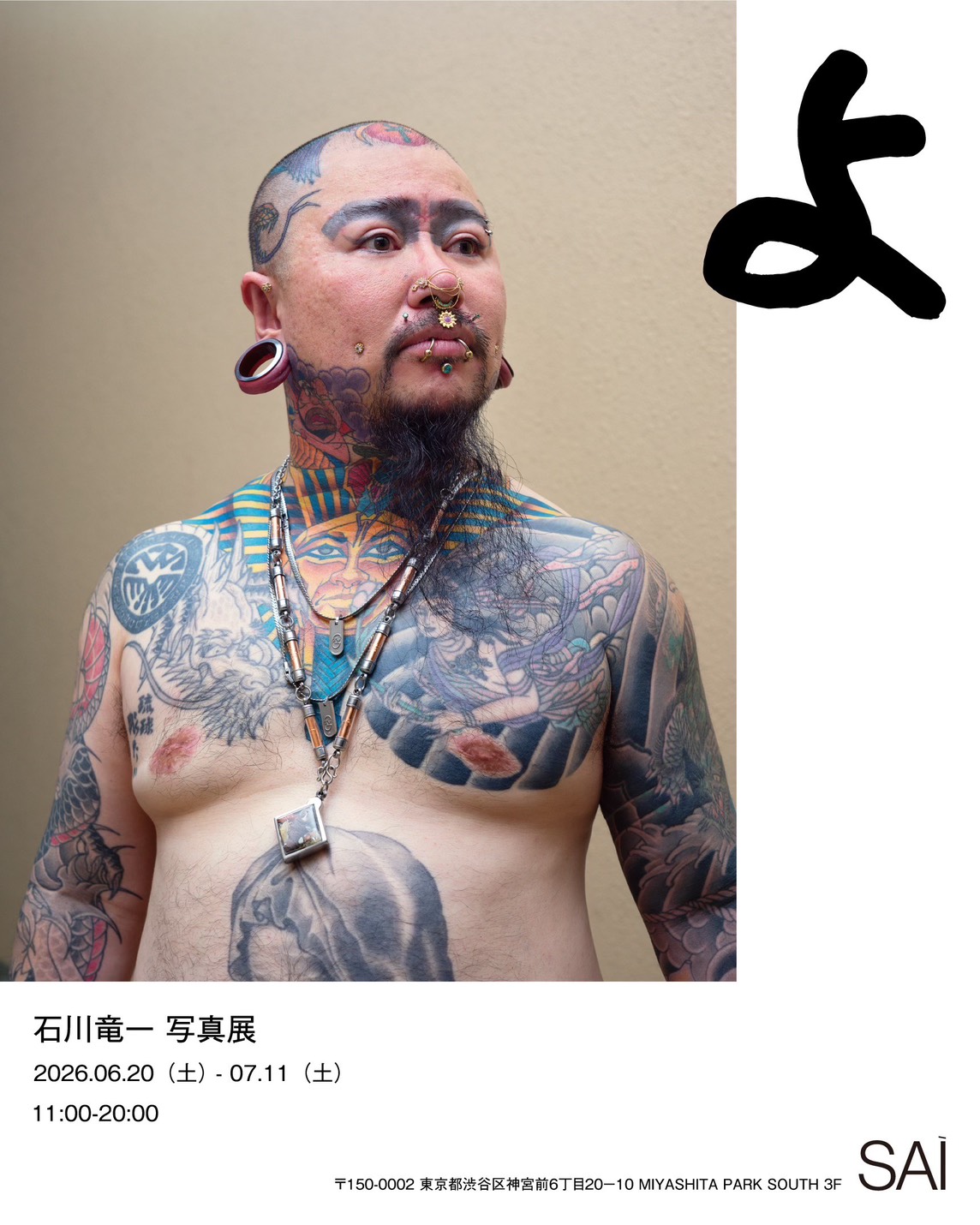
石川竜一 写真展「よ」
会期:2026年6月20日(土)~7月11日(土)
時間:11:00〜20:00
会場:SAI(東京都渋谷区神宮前6-20-10 RAYARD MIYASHITA PARK South 3F)
入場無料
<関連イベント>
7月4日(土)16:00〜17:30
ゲスト:東出昌大 氏
7月5日(日)14:00〜15:30
ゲスト:畠山直哉 氏
石川竜一写真展「よ」インタビュー
(Photo & Culture, Tokyo 7月3日 更新)
Artist Information
石川 竜一
1984年沖縄県生まれ。2010年、写真家 勇崎哲史に師事。2011年、東松照明デジタル写真ワークショップに参加。2012年「okinawan portraits」で第35回写真新世紀佳作受賞。2015年、第40回木村伊兵衛写真賞、日本写真協会賞新人賞受賞。
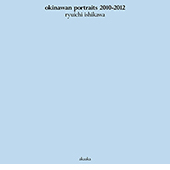
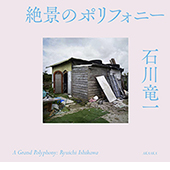
主な個展に、「RYUICHI ISHIKAWA」(gallery ラファイエット 沖縄、2014)、「zkop」(アツコバルー 東京、2014)、「okinawan portraits 2010–2012」(Place M 東京、2014)、「絶景のポリフォニー」(銀座ニコンサロン 東京、2014/大阪ニコンサロン 大阪、2015)、「okinawan portraits」(The Third Gallery Aya 大阪、2015)、「A Grand Polyphony」(Galerie Nord パリ、2015)、「okinawan portraits 2012–2016」(三菱地所アルティアム 福岡、The Third Gallery Aya 大阪、AM 東京、エプソンイメージングギャラリー エプサイト 東京、2016)、「Camp & Okinawa」(Have a nice GALLERY 台北、2016)、「草に沖に」(地点 京都、2017)、「zkop: a blessing in disguise」(Yamamoto Keiko Rochaix ロンドン、2018)、「OUTREMER|群青」(The Third Gallery Aya 大阪、2018)、「home work」(地点 京都、2018/The Third Gallery Aya 大阪、2019)、「草の肌」(ギャラリーKTO 東京、2021)、「いのちのうちがわ」(SAI 東京、2021/The Third Gallery Aya 大阪、2022)、「風土 人間の殻」(ふげん社ギャラリー 東京、2023)、「KG+ 2024 いのちのうちがわ」(京都場処 京都、2024)、「風景とわたし」(GALLERY KTO 東京、2025)など。
主なグループ展に、「木村伊兵衛写真賞40周年記念展」(川崎市民ミュージアム 川崎、2015)、「OKINAWA : UNE EXCEPTION JAPONAISE」(Le Plac’Art Photo パリ、2016)、「BODY/PLAY/POLITICS」(横浜美術館 横浜、2016)、「六本木クロッシング2016展 僕の身体、あなたの声」(森美術館 東京、2016)、「Looking at Borders」(Casa Asia キューバ、2017/ロシア国立東洋美術館 モスクワ、2017)、「日産アートアワード2017:ファイナリスト5名による新作展」(BankART Studio NYK 横浜、2017)、「Fotografia Europea 2019」(Chiostri di San Pietro レッジョ・エミリア、2019)、「Oh!マツリ★ゴト 昭和・平成のヒーロー&ピーポー」(兵庫県立美術館 神戸、2019)、「作家と現在 ARTISTS TODAY」(沖縄県立博物館・美術館 那覇、2019)、「Reborn Art Festival 2019」(石巻、2019)、「想像力という<資本>」(もうひとつの京都 八幡、2021)、「Still Alive 国際芸術祭 あいち2022」(愛知芸術文化センター 名古屋、2022)など多数。
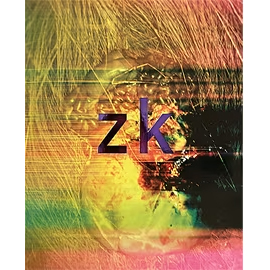
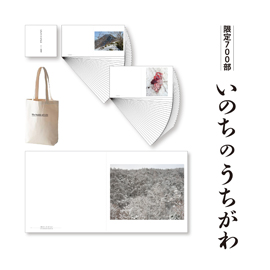
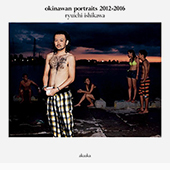
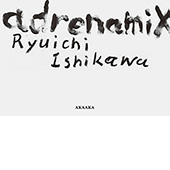
主な写真集に、『絶景のポリフォニー』、『okinawan portraits 2010–2012』(2014)、『adrenamix』(2015)、『okinawan portraits 2012–2016』、『いのちのうちがわ』(2021)、『zk』(2022、ともにすべて赤々舎刊)、『Camp』(Slant 2016)、『Sunset』(2025 bookshopM)などがある。
Ryuichi Ishikawa
Born in Okinawa in 1984. In 2010 he studied under photographer Testushi Yuzaki. In 2011 he participated in the Shomei Tomatsu Digital Photography Workshop. He received the 35th New Cosmos of Photography Honorable Mention for “okinawan portraits” in 2012. In 2015, he received the 40th Kimura Ihei Photography Award and the Photographic Society of Japan Newcomer’s Award.
Major solo exhibitions include 2014 “RYUICHI ISHIKAWA” (gallery Lafayette, Okinawa); “zkop” (ATSUKOBAROUH, Tokyo); “Okinawan Portraits 2010–2012”(Place M, Tokyo); “A Grand Polyphony”(Ginza Nikon Salon, Tokyo, later traveling to Osaka Nikon Salon, Osaka 2015); 2015 “Okinawan Portraits” (The Third Gallery Aya, Osaka); “A Grand Polyphony” (Galerie Nord, Paris); 2016 “okinawan portraits 2012–2016”(Mitsubishi Estate Artium, Fukuoka, The Third Gallery Aya, Osaka, AM, Tokyo, and Epson Imaging Gallery epSITE, Tokyo); “Camp & Okinawa”( Have a nice GALLERY, Taipei); 2017 “For Vegetation, For Land” (Chiten, Kyoto); 2018 “zkop: a blessing in disguise”(Yamamoto Keiko Rochaix, London); “OUTREMER” (The Third Gallery Aya, Osaka); “home work” (Chiten, Kyoto and The Third Gallery Aya, Osaka 2019); 2021 “Skin of Grass” (Gallery KTO, Tokyo); “The Inside of Life” (SAI, Tokyo and The Third Gallery Aya, Osaka 2022); 2023 “Terroir – The Shells of Human Beings” (Fugensha, Tokyo); 2024 “The Inside of Life” (KG+ KYOTOWAND, Kyoto); and 2025 “The Landscapes and Me”(GALLERY KTO, Tokyo).
Major group exhibitions include 2015 the “40th Kimura Ihei Memorial Photography Award Exhibition” (Kawasaki Civic Museum, Kawasaki); 2016 “OKINAWA : UNE EXCEPTION JAPONAISE” (Le Plac’Art Photo, Paris ); “BODY/PLAY/POLITICS” (Yokohama Museum of Art, Yokohama); “ROPPONGI CROSSING 2016: My Body, Your Voice”(Mori Art Museum, Tokyo); 2017 “Looking at Borders” (Casa Asia, Cuba, and later at the State Museum of Oriental Art, Moscow); “Nissan Art Award 2017: Exhibition of New Works by Five Finalists” (BankART Studio NYK, Yokohama); 2019 “Fotografia Europea” (Chiostri di San Pietro, Reggio Emilia); “Oh! Matsuri ★ Goto Showa / Heisei Heroes and People in the Japanese Contemporary Art” (Hyogo Prefectural Museum of Art, Kobe); “Artists Today” (Okinawa Prefectural Museum & Art Museum, Naha); “Reborn Art Festival 2019”(Ishinomaki,Miyagi); 2021 “Alternative Kyoto” (Hachiman, Kyoto); and 2022 “Still Alive: Aichi Triennale”(Aichi Arts Center, Nagoya), among others.
Photo books include, A Grand Polyphony(2014), Okinawan portraits 2010-2012(2014), adrenamix(2015), okinawan portraits 2012-2016(2016), The Inside of Life(2021), zk(2022 all published by AKAAKA), CAMP (2015 SLANT), and Sunset (2025 bookshopM).
.