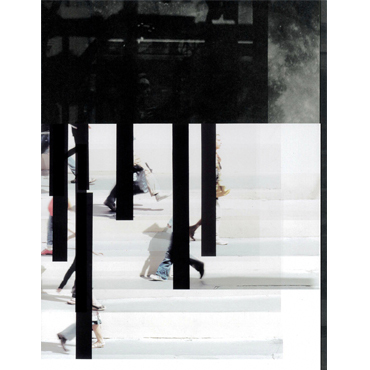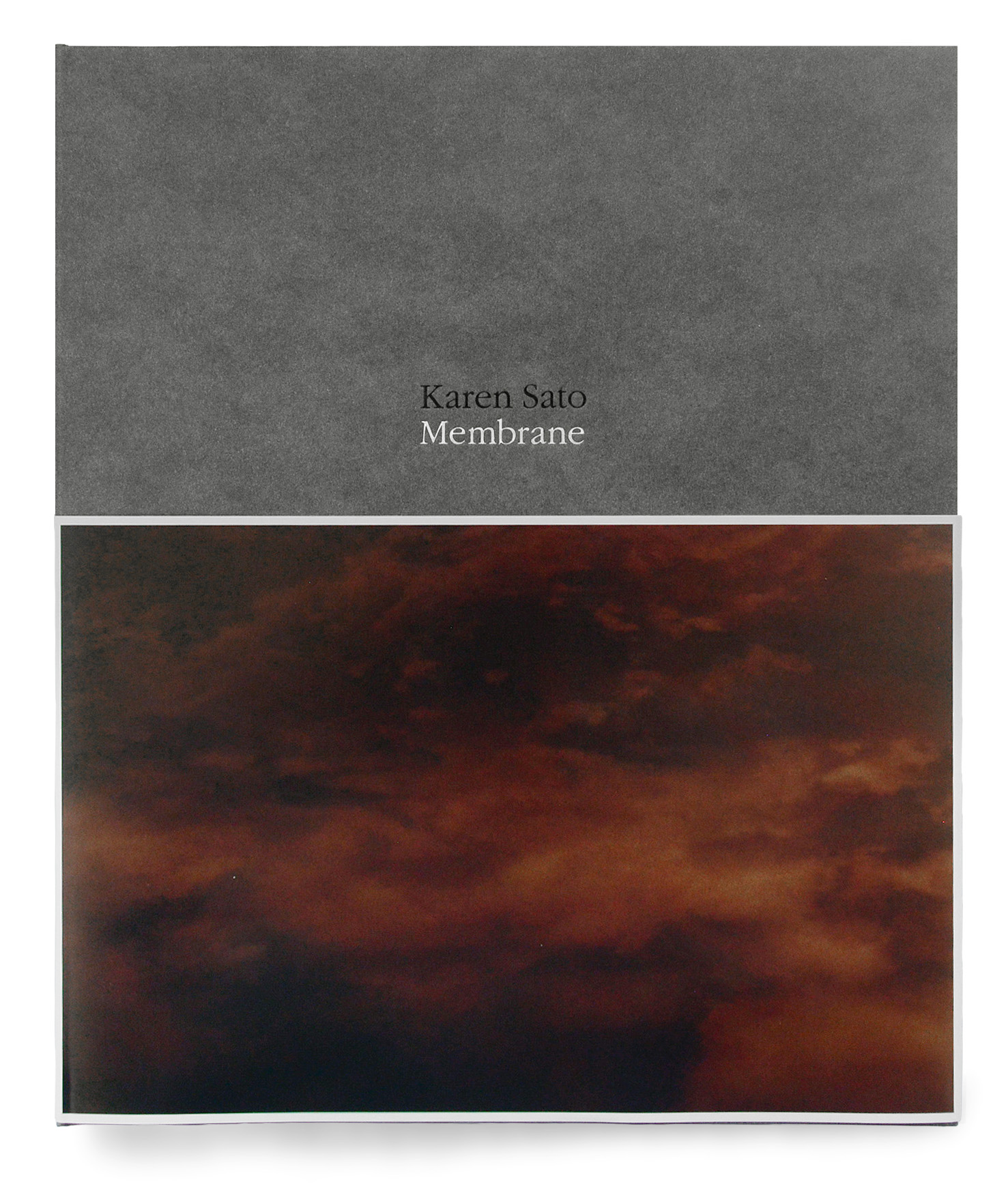
佐藤 華連『Membrane』
Book Design:須山悠里
発行:赤々舎
Size:H267mm × W222mm
Page:88 pages
Binding:Hardcover, Swiss
Published in May 2026
ISBN:978-4-86541-228-4
¥ 5,000+tax
国内送料無料!
About Book
イメージは時空を行き来し、対象も私も変わりゆく──佐藤華連の初写真集。
『Membrane』は、2009年から15年にわたり撮影された写真によって構成される、佐藤華連の初写真集である。
本書の出発点にあるのは、「見る」という行為そのものへの問いである。
自己を俯瞰しながら、世界と私がどのように接続され、どのようなイメージを結んでいるのか。
目に見えるものだけでなく、見えない像や記憶の層にも眼差しを向けながら、佐藤は写真というメディアを通して、その輪郭を探り続けてきた。
写真は世界を複製する。しかし、その複製は断片となり、重なり、あるいは剥ぎ取られることで、新たなイメージを立ち上がらせる。
本書には、繰り返された観察と思索の軌跡が、一冊の本というかたちのなかに静かに編み上げられている。
抽象的な問いから始まった写真は、ページをめくるなかで互いに呼応し、新たな意味を生み出していく。
写真と本というメディアが深く響き合うことで、見ることと世界との関係は、私たちの内側にも静かな共振をもたらすだろう。
“「Membrane」は、膜や膜状の構造を意味する。
── 佐藤華連
自己という境界を経てイメージは時空を行き来し、対象も私も変わりゆく。
静かな共鳴を起点に、そこに現われるものを知るために、私は見ることを繰り返す。“
“2010年にデビューした佐藤華連の作品もまた、写真の写真という感性や、無人の日常風景を切り取って異化するスタイルをネオコンポラと共有しているが、そこに「クールで醒めた感覚」は欠けている。佐藤の写真世界は、クールでドライというよりは、メランコリックな薄暗がりに沈みがちであり、陽の差さないその世界の大気は湿っているからだ。(中略)
清水穣(写真評論家)寄稿
最後に、一群の静物写真(古道具、遺物、古びた展示品、オブジェ、果物、貝殻)がある。これらは、リミナルスペースのような不安というよりは、かつて大切にされていたかもしれない古道具の懐かしさ、あるいは見捨てられ切った遺物の安らぎとでも言うべき感情を引き寄せるものである。そこには、出口なき社会の閉塞感と絶望のなかで、しかしそういう社会から降りた生の、吹き溜まりの中のくつろぎがある。“
「無人境のくつろぎ 佐藤華連の写真」より
Membrane
Karen Sato
Karen Sato was the Grand Prize winner of the first Canon New Cosmos of Photography competition after a new panel of judges was formed in 2010. One prevailing trend in the works submitted at the time, it would be what I call “neo-konpora” photographs in the genre of konpora photography appearing on the Japanese photography scene from the late 1960s to the 1970s. Konpora,an abbreviated form of “contemporary,” refers to the 1966 exhibition “Contemporary Photographers: Toward a Social Landscape,” curated by Nathan Lyons and held in Rochester, New York. This groundbreaking exhibition represented an attempt to take photography beyond the realm of realism in response to the advent of informational capitalism, which invalidated the realist conception that photography exposes the real world as it is by circulating the very values of “real” and “as it is” as commodities. […]
In the past, before it was absorbed into the social system (its functions, meanings, values, and interpretations), photography sought the world “as it is” and tried to move to the “outside” that lies beyond the system. But the newly emerging society of informational capitalism was precisely a society in which that “outside” was circulated as a commodity. In a society with no exit, where the “outside” has been lost, where can photography turn? This is the question posed by konpora photography.
The work of Karen Sato, who debuted in 2010, also shares with neo-konpora a sensitivity to photographs of photographs and a style that isolates and defamiliarizes everyday scenes devoid of people. Sato’s photographic world is cool and dry and tends to settle into a melancholic dimness—a quality due to the damp atmosphere of a sunless world.
In fact, Sato’s work evokes the concept of “liminal space,” which has gone viral on the internet since roughly 2020, the year of the COVID outbreak, and has stirred considerable debate. A representative example is Liminal. Les nouveaux espaces de l’angoisse [Liminal. New spaces of anxiety] (2023) by the French YouTuber ALT236. […]
Descriptions appropriate to the term ‘liminal’ include a boundary zone or an in-between space—a boundary between artificial and natural, a transit space from one place to another, or an endless background space. Furthermore, liminal space can also be a place where there would normally be people but which, for some reason, is empty—for example, lights remain on in an uninhabited space, placing it on the threshold between absence (no one there) and presence (someone there). […]
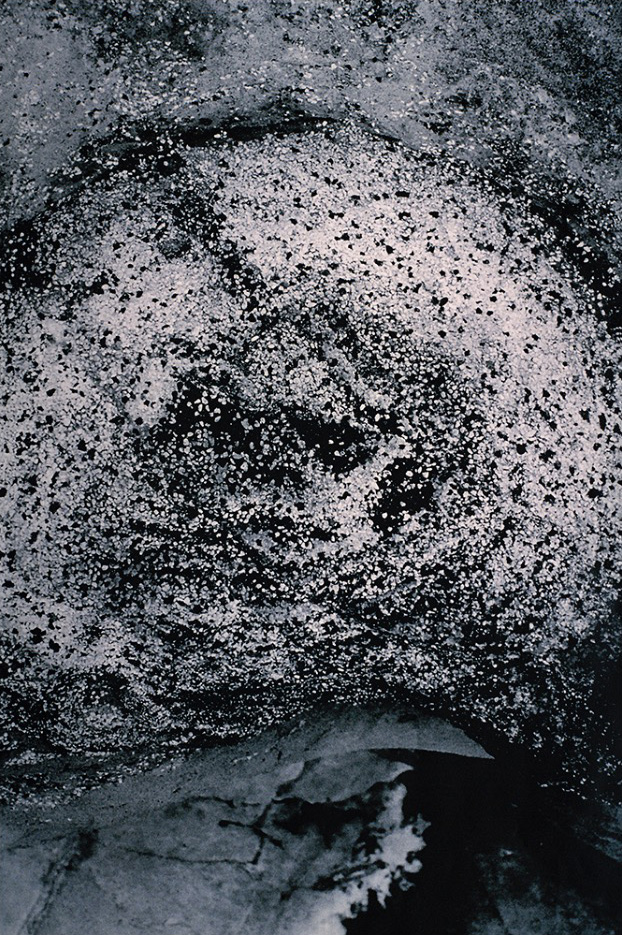
Let us view Karen Sato’s photobook in relation to three reference points—suburbia (1970s to 1980s), neo-konpora (late 1990s to 2010s), and liminal space (2020s). To begin with, from start to finish, no human beings appear in the spaces depicted apart from images of humans that may be present in the photographs or illustrations. Landscapes on the outskirts of cities—satoyama, shorelines and beaches as boundaries between land and water, a field of withered sunflowers, a seacoast—can be associated with suburbia. An awareness of flat visual layers—photographs or illustrations within photographs, double images and collage, the surface of water, surfaces hit by light, screen surfaces, focal planes, overlapping shadows of trees—is something it shares with neo-konpora photography. Nor is there a lack of liminal-space imagery—the motif of a kind of infinity, in the sense that no end is visible, such as black holes, spiral shells, and corridors whose end cannot be seen; and situations of absence, such as empty interiors and abandoned houses. Another characteristic element of the photobook is the presence of obstructed or dead-end landscapes—scenes divided by railings or fences, or blocked by massive retaining walls or cliffs. In other words, as to suburbia, this photobook aligns with neo-konpora and liminal-space photography in accepting the reality of “no exit” and “no outside.” Moreover, one might also cite all-over abstract images—surfaces such as sand, rocks, rock faces, water, or the ground—as variations on this dead-end condition. The textures of these surfaces are decidedly dark and damp; the dry, cool sensibility associated with neo-konpora photography is nowhere to be seen. Finally, there is a group of still-life photographs—old tools, relics, aged display items, objects, fruit, seashells. These images evoke nostalgia for old tools that once may have been cherished and the peaceful stillness associated with relics long since abandoned, rather than the unease inherent in liminal spaces. There, amid the stagnation and despair of a society with no exit, is life that has withdrawn from it into quiet repose, as things that drift on the wind into tranquil corners.
Minoru Shimizu (Art Critic)
Excerpt edited from the text “Chilling in the Limen: Karen Sato’s Photography“
“Membrane” refers to a film or membranous structure.
Images move back and forth through time and space, passing through the boundary I call the self, and both the subjects and I continue to change.
Beginning from a quiet resonance, I continue to look again and again in order to understand what appears there.
Karen Sato
Related Exhibiton
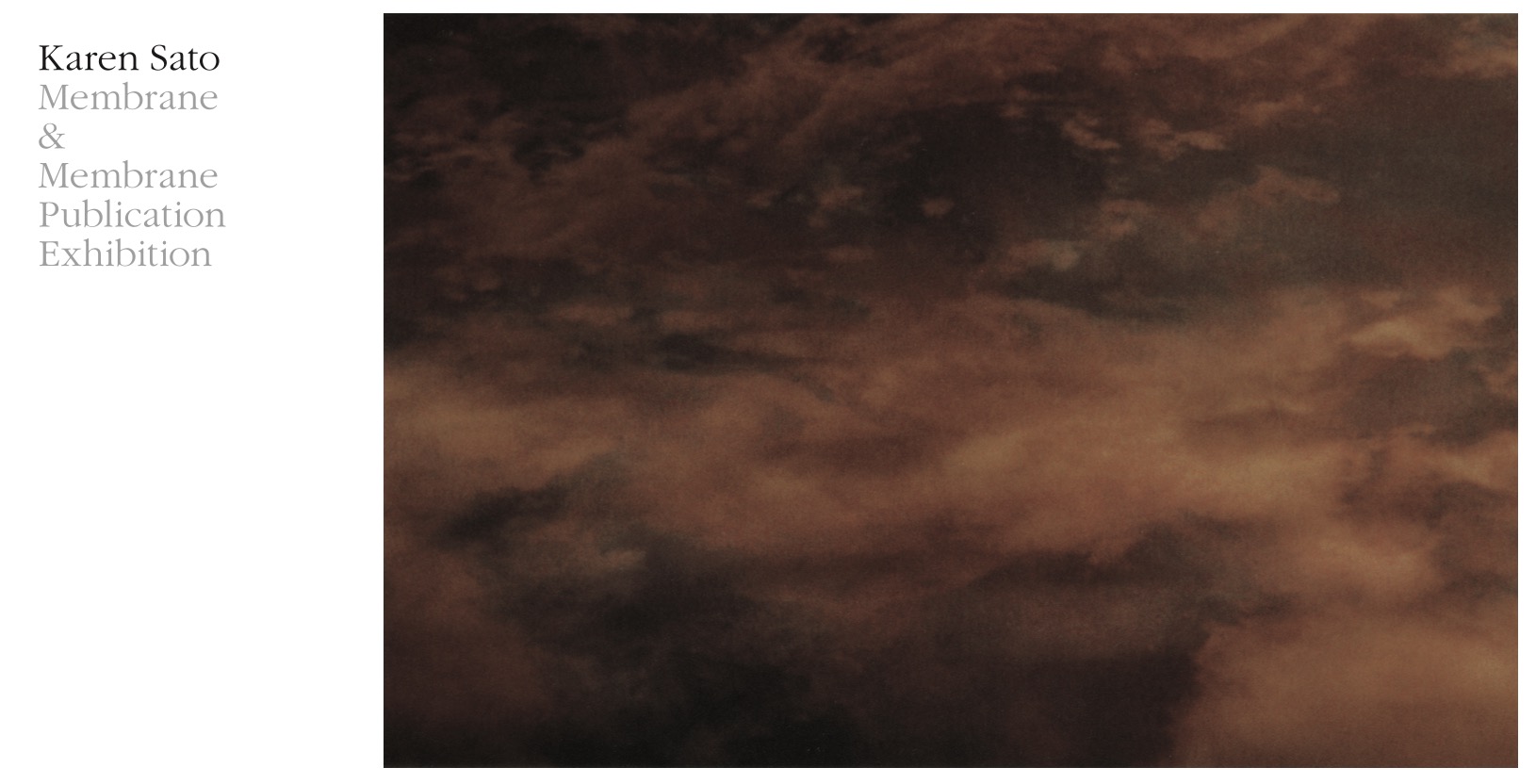
佐藤華連 「Membrane & Membrane Publication Exhibition」
会期:2026年4月30日(木)〜5月19日(火)
時間:12:00〜19:00
会場:BOOK AND SONS(東京都目黒区鷹番2-13-3キャトル鷹番)
水曜定休/入場無料
刊行記念トーク:5月9日(土) 14:00〜
佐藤華連 ✕ 姫野希美(赤々舎)✕須山悠里(デザイナー)
入場無料・予約不要
佐藤華連 写真展「Membrane」
会期:2026年6月9日(火)~2026年6月22日(月)
時間:10:30~18:30(最終日は15:00まで)
会場:ニコンサロン(東京都新宿区西新宿1-6-1 新宿エルタワー28階)
日曜休み
【ギャラリートーク】2026年6月20日(土)14:00~
佐藤 華連、ゲスト:梅津 元(批評家/キュレーター)、菊田 樹子(インディペンデント・キュレーター)
会場:ニコンサロン(ニコンプラザ東京内)
定員:20名(当日先着順、参加費無料)
Artist Information
佐藤 華連
1983年神奈川県生まれ。早稲田大学芸術学校空間映像科写真コース修了。2010年にキヤノン写真新世紀グランプリ受賞、優秀賞(清水穣選)受賞。2026年に写真集「Membrane」を刊行。
主な個展に「I 波と影」(ふげん社 東京 2020)、「I」(kanzan gallery 東京 2016)、「cage」(E&C gallery 福井 2012)、「間、うつろう」(せんだいメディアテーク 仙台 2012)、「間、うつろう」(アートコートギャラリー 大阪 2012)、「間、うつろう」(東京都写真美術館 東京 2011)。
主なグループ展に、「showcase #9 curated by minoru shimizu “visions in and out”」(eNarts 京都 2021)、「HAKKA GROUP EXHIBITION VOL.3」(ミツバコウサクショ 東京 2017)、「創造海岸いなげ展」( 千葉市民ギャラリー・いなげ 千葉 2014) 「HAKKA GROUP EXHIBITION VOL.2」(BankART Studio NYK / 2A 横浜 2014)、「The 3rd International Art Photography Festival IN FOCUS 2011 「internalized」 (Vilnius Graphic Art Centre gallery ヴィリニュス リトアニア 2021)などがある。
Karen Sato
Born in Kanagawa Prefecture, Japan, in 1983, She graduated from the Art and Architecture School of Waseda University. In 2010, she received both the Grand Prize and the Excellence Award (selected by Minoru Shimizu) at the Canon New Cosmos of Photography. In 2026, she published her photobook Membrane.
Her major solo exhibitions include I: Waves and Shadows (Fugensha, Tokyo, 2020), I (Kanzan Gallery, Tokyo, 2016), cage (E&C Gallery, Fukui, 2012), and Memento mori (Sendai Mediatheque, Sendai, 2012; ARTCOURT Gallery, Osaka, 2012; Tokyo Metropolitan Museum of Photography, Tokyo, 2011).
Selected group exhibitions include showcase #9 curated by Minoru Shimizu “visions in and out” (eNarts, Kyoto, 2021), HAKKA GROUP EXHIBITION VOL.3 (MITSUBA Kosakusyo, Tokyo, 2017), Souzo Kaigan Inage (Chiba Citizens’ Gallery Inage, Chiba, 2014), HAKKA GROUP EXHIBITION VOL.2 (BankART Studio NYK / 2A, Yokohama, 2014), and The 3rd International Art Photography Festival IN FOCUS 2011 “internalized” (Vilnius Graphic Art Centre Gallery, Vilnius, Lithuania), among others.