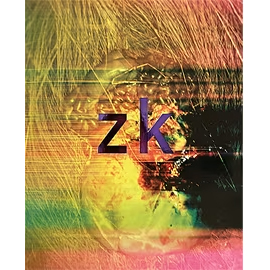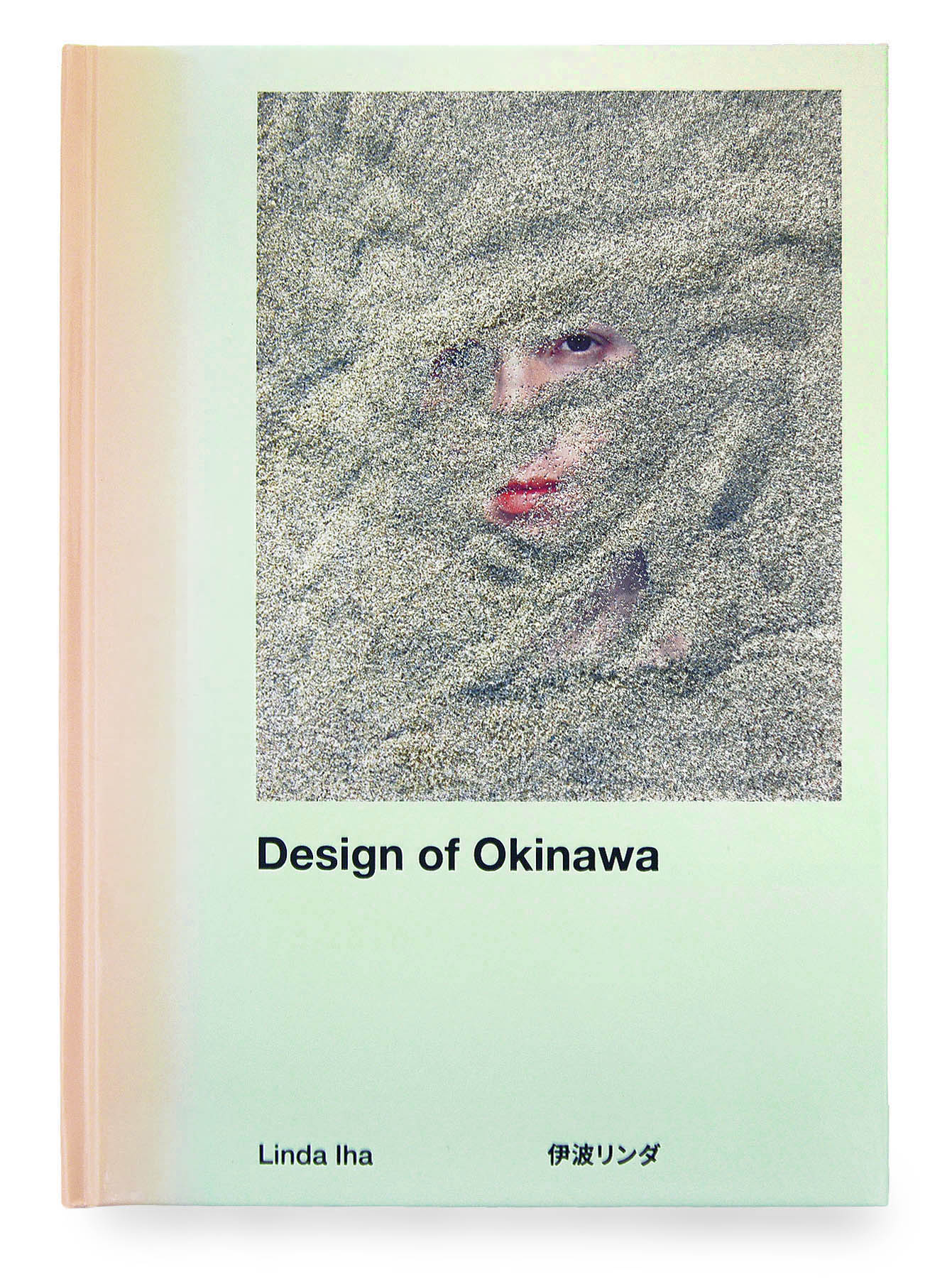
伊波リンダ『Design of Okinawa』
Book Design:陳 彥如 魏 妏如
協力:MISA SHIN GALLERY
発行:赤々舎
Size:H252mm × W180mm
Page:144 pages
Binding:Hardcover
Published in June 2026
ISBN:978-4-86541-232-1
¥ 5,000+tax
国内送料無料!
About Book
伊波リンダ、初写真集
何かものを配置して構成するように撮影することと、現場に立って撮影すること、
その両方が自分にとっては必要で、戦争とは正反対のことをしたかった。
(あとがきより)
『Design of Okinawa』は、沖縄を記録する写真集ではない。私たちは沖縄をどのように見ているのか、その「見る」という行為そのものを問い直し、再設計する写真集である。
伊波リンダにとって「Design of Okinawa」というタイトルは、単に沖縄の色や形、図像的な特徴を意味するものではない。それは、「デザインされている沖縄」と「沖縄のデザイン」という二つの意味を重ね合わせ、形態や構成だけではなく、その背景にある歴史、権力、記憶、人々の関係性までも含み込む言葉である。
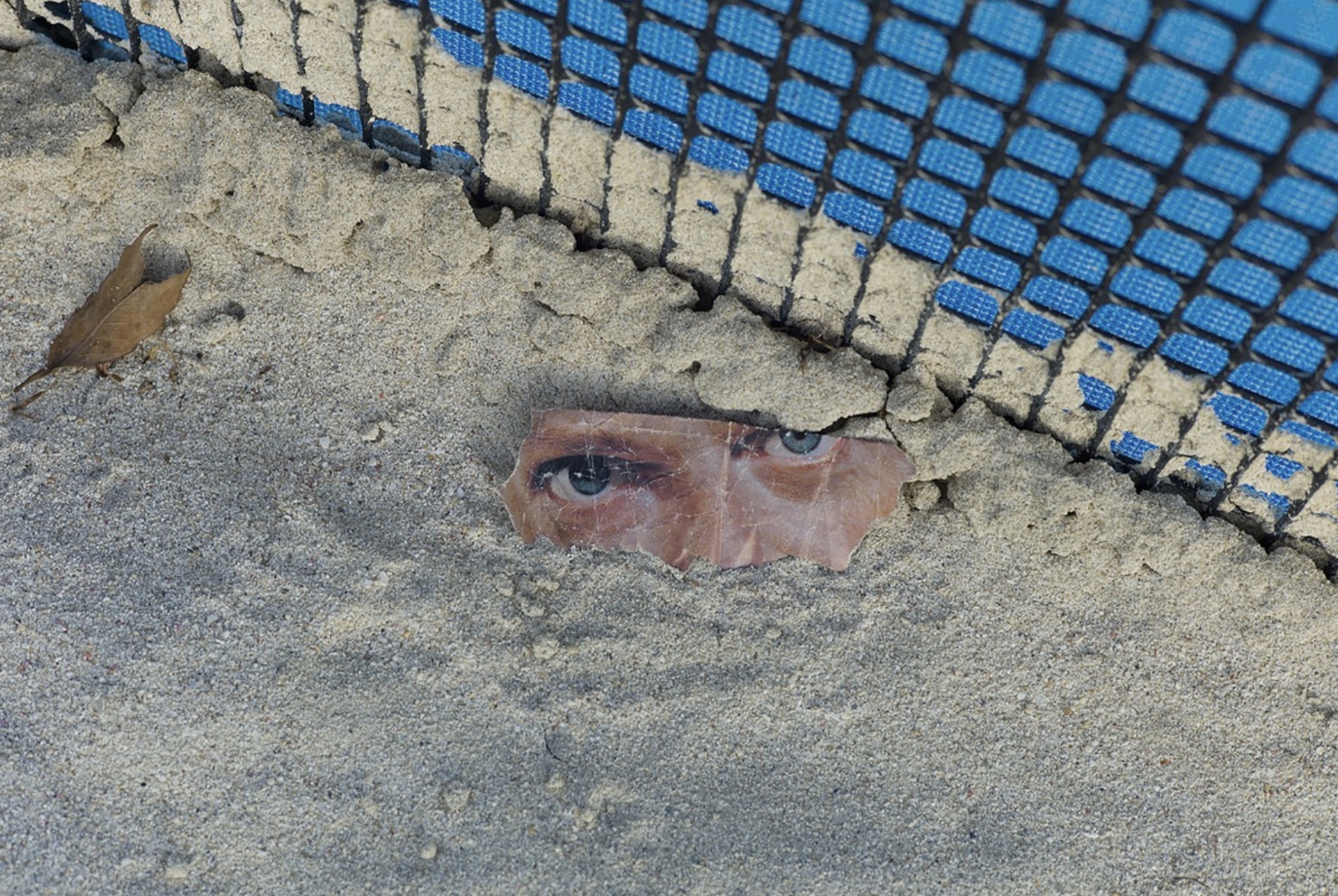
沖縄系移民をルーツに持ち、幼少期から米軍基地の、内と外を行き来しながら育った伊波は、沖縄で起こり続ける出来事を前に、どこで区切りをつけ、どのように語るべきかを問い続けてきた。本書には、基地の内部で撮影した風景、沖縄の日常、そしてコラージュ作品《Sleep in Contradiction(矛盾の中で眠る)》のシリーズが収められている。自身が親しんでいたアメリカの音楽雑誌を砂に埋めて撮影したこれらの作品は、日常のなかで無意識に受け入れていたイメージを解体し、沖縄の風景のなかに置き直すことで、新たな意味を立ち上がらせる試みでもある。
基地の内側と外側、沖縄とアメリカ、自然と人工、記録と構成。それらを単純な対立として境界を固定する視点で描くのではなく、イメージを往還させながら、それぞれの境界がいかに作られ、揺らぎ、反転し得るのかを静かに問いかけていく。
伊波は、「境界線ではない沖縄の線を、自分は軸としていたい」と記している。その言葉のとおり、本書は分断を可視化するためではなく、その境界のあいだに存在する複雑な現実を見つめ続けるための写真集である。
ページをめくるごとにイメージ同士が響き合い、沖縄を見る方法そのものが更新されていく。
『Design of Okinawa』は、写真集というメディアだからこそ実現できる思考の空間を生み出し、沖縄という固有の場所から、境界、記憶、アイデンティティをめぐる普遍的な問いを世界へ投げかけている。
“「デザイン」という言葉は極めて人工的に響くが、デザインされた風景がこちらに浸潤してきたときに、それは新たな「地」となる。もう一度思い起こそう。われわれはどのような現実にも慣れてしまうのである。「デザイン」といってしまうことは、「自然」を引き剥がす、つまりは抵抗の所作でもあるのだ。(中略)
「図」と「地」がもたらす権力を牽制し、どちらが優位であるかということを敢えて括弧に括り、ともに観ようとするハイブリッドなまなざしは、ますます分断が極まるこの現在において、ひとつの処方箋ともいえないか。伊波の眼を借りて、いまある現実を観てみよう。そのときようやく、総体としての「デザイン」がみえてくるはずである。重要なことは、それを自明視してはいけないという、強靭なまなざしである。こうした営為は、眼を取り戻す自治の所作にもみえるし、「どちらにも観ることができる」というところから語るという、切実で個人的なまなざしでもあるだろう。”
亀海 史明(沖縄県立博物館・美術館 主任学芸員)
本書寄稿『沖縄に見える「図」と「地」 ——ハイブリッドなまなざしについて』より
Design of Okinawa
Linda Iha
There is a photograph showing tattoos of a shisa and a skull. I took it outside, laid it on the concrete, and filmed it on video.
An ant walks across the photograph as light shifts around it. Even when filmed on video, what is captured in the photograph does not move; only time passes. It seemed to overlap withOkinawa.
In Okinawa too, all kinds of things are constantly happening. It took a long time for this photobook to be published because as I continued photographing, I kept making excuses for my indecision about where I should draw a line and bring everything together. I place myself within an Okinawan history I did not experience. I was in an environment that allowed me to move back and forth between Okinawa and the world of the military bases, but it was always something I wanted to avoid facing and speaking about.
But no matter how much I explored the question of what to do with what I had personally seen and experienced in everyday life, ultimately, all I could do was continue thinking about it while photographing.
One of the things that originally led me to photography was my interest in movie poster design. I was searching for an approach to photographing Okinawa at a time when I couldn’t bring myself to photograph people, and it was then that I began working on a series called Sleep in Contradiction, in which I tore images of people from music magazines purchased on the bases and buried the fragments in the sand.
Forced construction at sea, mountains cut away, opposing voices pushed aside— standing there, wondering in what way I could become involved and how I could continue that involvement, I gradually began photographing the bases and people more frequently. This process led to the series Design of Okinawa, which can be understood in two senses—’Okinawa as something designed’ and ‘designs that emerge from Okinawa.’ By ‘design,’ I mean not only form and color but also background, relationships, and contradictions.
I felt that both photographing things I positioned and composed and photographing what I saw standing at actual sites were both necessary for me. I wanted to do something in complete opposition to war.
Although I was photographing the reality I was seeing, a photograph taken through a hole in a fence might appear as though it had been taken from inside a base, or the sea seen from a base could seem like a view from outside the base. I don’t know how each person is going to understand scenes that can be viewed with these kinds of reversals in perspective, but somewhere within myself there was something like resolve to accept that as well.
What I saw at sites in Okinawa overlaps with what is happening in many different places. It is not limited to the U.S. military bases. The military buildup of Japan Self-Defense Force bases under what is called the ‘southwestern shift’ on Ishigaki Island, Miyako Island, Yonaguni Island, and Okinawa Island has deepened conflict and division, and those in power are casting aside important things.
Perhaps the people in these photographs also left Okinawa and went off to war.
People who lived—and people who had wished to live—without being divided by boundaries or distinctions between inside and outside. Okinawa is set against a backdrop layered with memories of war that form a line very different from boundary lines. On that line appears an Okinawa that turns its back on war.
It is this line, free from boundaries, that I want to make the axis of my work.
.
“The word “design” carries the sense of extreme artificiality. Yet, when designed landscapes enter into the world, they become new “ground.” As I stated above, we adapt to whatever reality we find ourselves in. So to call something “designed” strips away its “naturalness” and is itself an act of resistance. […]
Fumiaki Kamegai(Chief Curator, Okinawa Prefectural Museum and Art Museum)
To move toward individuality is also to resist divisive conceptual frameworks. A hybrid way of seeing that balances and checks the power of “figure” and “ground” while deliberately bracketing the question of which is superior—might this not offer a prescription for our present age of deepening polarization? Let’s try looking at the immediate reality through Iha’s eyes. Only then will we finally be able to see the overall “design.” What is important is a resilient
way of seeing that refuses to regard anything as self-evident. Such an endeavor appears to be the autonomous act of reclaiming one’s own capacity to see—a compelling and irreducibly individual way of seeing both sides.”
Excerpt from the text “Figure and Ground in Okinawa: On a Hybrid Way of Seeing”
Related Exhibiton
伊波リンダ 個展「Design of Okinawa」
会期:2026年6月20日(土)〜7月18日(土)
時間:12:00〜19:00
会場:MISA SHIN GALLERY(東京都港区南麻布3-9-11パインコーストハイツ1F)
日月祝休み、入場無料
Tokyo Art Beat インタビュー記事
「フェンスの内と外、その両方を生きて。写真家・伊波リンダが撮り続ける沖縄のかたち」
(聞き手:白坂由里)
Artist Information
伊波リンダ
1979 年 沖縄生まれ
沖縄在住 沖縄を拠点に活動
主な個展
2026 「Design of Okinawa」MISA SHIN GALLERY、東京
2025 「おきなわはうたう 普久原恒勇・伊波リンダ2人展」Buffer、沖縄
2018 「Nowhere」PIN-UP Gallery、沖縄
2015 「Design of Okinawa」琉球新報社本社 1F ギャラリー、沖縄
2014 「矛盾の中で眠る」(連続写真展「Obscure」北上奈生子・渡久地葉月・伊波リンダ)
那覇市ぶんかテンブス館、沖縄
2013 「静かな光に触れる」那覇市民ギャラリー、沖縄
2011 「I am」沖縄県立博物館・美術館 1F ギャラリー3、沖縄
主なグループ展
2023-24 「やんばるアートフェスティバル 2023-2024」大宜味村立旧塩屋小学校、沖縄
2022-23 「六本木クロッシング 2022 展:往来オーライ!」森美術館、東京
2022 「PARADISE OKINAWA」MISA SHIN GALLERY、東京
2021 「BENIZAKURAPARK ART ANNUAL 2021 交わる水 − 邂逅する北海道/沖縄」
CAI03、札幌
2020 「札幌国際芸術祭 2020」札幌(オンライン開催)
2020 「VOCA 展 2020 現代美術の展望─新しい平面の作家たち」上野の森美術館、東京
2019-20 「作家と現在」沖縄県立博物館・美術館、沖縄
2017 「写真家が見つめた沖縄 1972-2017」沖縄県立博物館・美術館、沖縄
2016 「沖縄写真 まぶいぐみ連続写真展 Vol.1 小橋川共男 & 伊波リンダ」
ギャラリーラファイエット、沖縄
2016 「沖縄写真 タイフーン連続写真展 新編 太陽の鉛筆 : 東松照明+ Reflection」
キヤノンオープンギャラリー、東京
2012 「復帰 40 年写真展 眼の記憶」那覇市民ギャラリー、沖縄
2010 「沖縄から始まる新しい日常―MIO 5人展」沖縄県立博物館・美術館、沖縄
2009 「東松照明 デジタル写真ワークショップ 5 + 2 人展」沖縄タイムス社、沖縄
Linda Iha
Born 1979 in Okinawa, Japan
Lives and works in Okinawa, Japan
Selected Solo Exhibitions
2026 “Design of Okinawa,” MISA SHIN GALLERY, Tokyo, Japan
2025 “Okinawa wa utau, Tsuneo Fukuhara・Linda Iha, Two person show,”
Buffer, Okinawa, Japan
2018 “Nowhere,” PIN-UP Gallery, Okinawa, Japan
2015 “Design of Okinawa,” Ryukyu Shimpo Headquarters Building 1F Gallery,
Okinawa, Japan
2014 “Sleep in Contradiction,” (in a relay photo exhibition “Obscure” by
Naoko Kitaue, Hazuki Toguchi, Linda Iha), Tenbusu Naha,
Okinawa, Japan
2013 “Touch the Silent Lights,” Naha Civic Gallery, Okinawa, Japan
2011 “I am,” Okinawa Prefectural Museum and Art Museum 1F Gallery 3,
Okinawa, Japan
Selected Group Exhibitions
2023-24 “Yambaru Art Festival 2023-2024,” Ogimi Village Former Shioya
Elementary School, Okinawa, Japan
2022-23 “Roppongi Crossing 2022: Coming & Going,” Mori Art Museum,
Tokyo, Japan
2022 2021 “PARADISE OKINAWA,” MISA SHIN GALLERY, Tokyo, Japan
“BENIZAKURAPARK ART ANNUAL 2021, Crossing Water: Encounter of
Hokkaido and Okinawa,” CAI03, Sapporo, Japan
2020 2020 “Sapporo International Art Festival 2020,” Sapporo, Japan (held online)
“VOCA 2020: The Vision of Contemporary Art,” The Ueno Royal Museum,
Tokyo, Japan
2019-20 “Artists Today,” Okinawa Prefectural Museum and Art Museum,
Okinawa, Japan
2017 “Okinawa: Through the Eyes of a Photographer 1972-2017,”
Okinawa Prefectural Museum and Art Museum, Okinawa, Japan
2016 “Okinawa Photography Mabuigumi Vol.1 Tomoo Kobashigawa &
Linda Iha,” gallery rougheryet, Okinawa, Japan
2016 “Okinawa Photography: Typhoon Series —The Pencil of the Sun (New
Edition): Shomei Tomatsu + Reflection,” CANON Open Gallery,
Tokyo, Japan
2012 “40 Years Since Reversion: The Memory of the Eyes, Photography
Exhibition,” Naha Civic Gallery, Okinawa, Japan
2010 “New Daily Life Starting from Okinawa: MIO Made in Okinawa, 5-Person
Exhibition,” Okinawa Prefectural Museum and Art Museum,
Okinawa, Japan
2009 “Shomei Tomatsu Digital Photography Workshop: 5+2 Group Exhibition,”
Okinawa Times Building, Okinawa, Japan
.