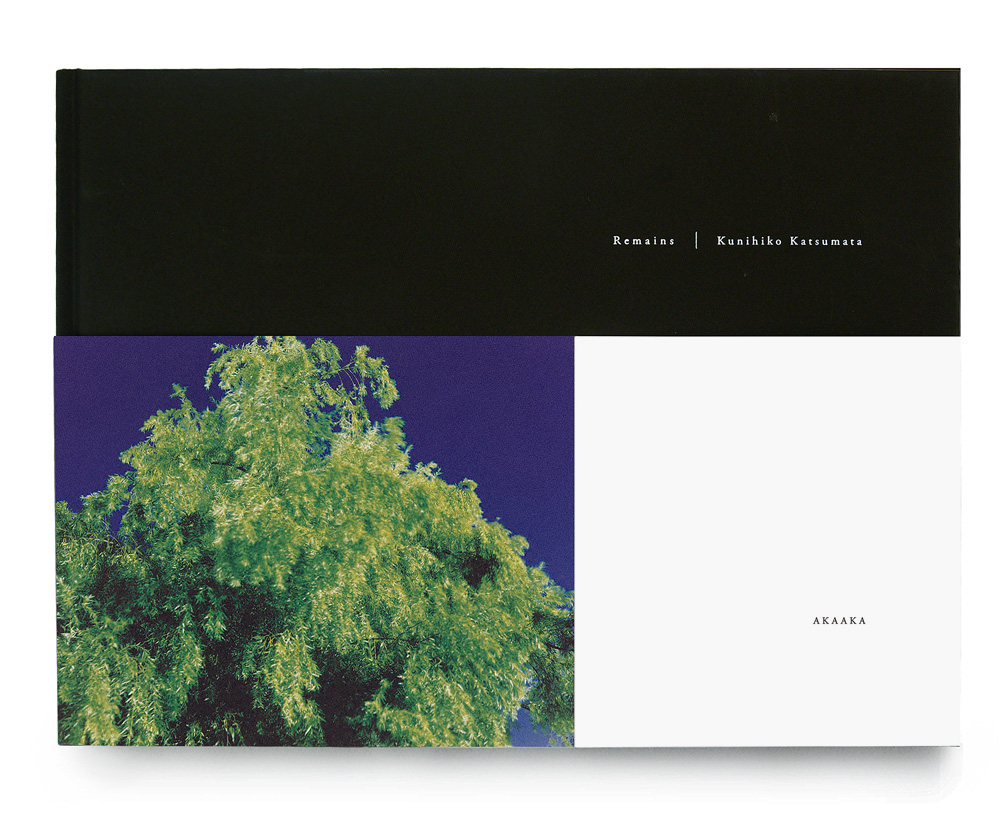
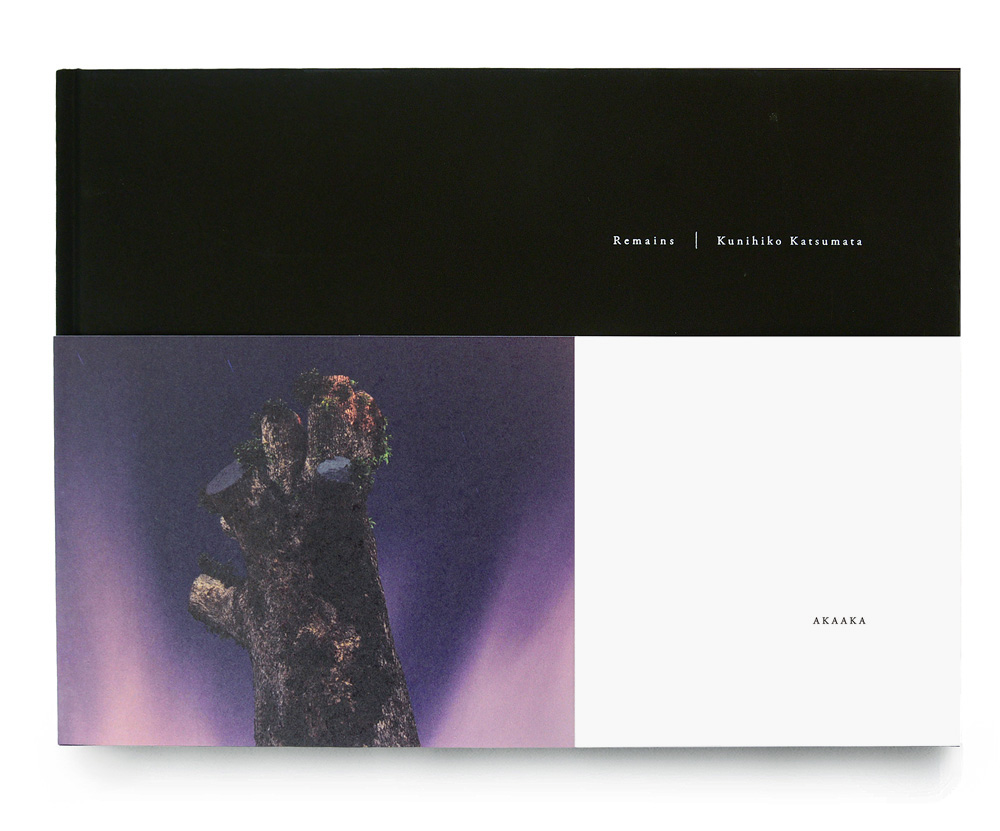


勝又公仁彦『Remains』
Book Design:遠藤一成
発行:赤々舎
Size:H230mm×W304mm
Page:136 pages
Binding:Hardcover
Published in December 2025
ISBN:978-4-86541-217-8
表紙2種類(中身は同一)
2 types of covers(Same Contents)
¥ 5,500+tax
国内送料無料!
About Book
広島と長崎で撮影された被爆樹木。戦後80年、生のレクイエム
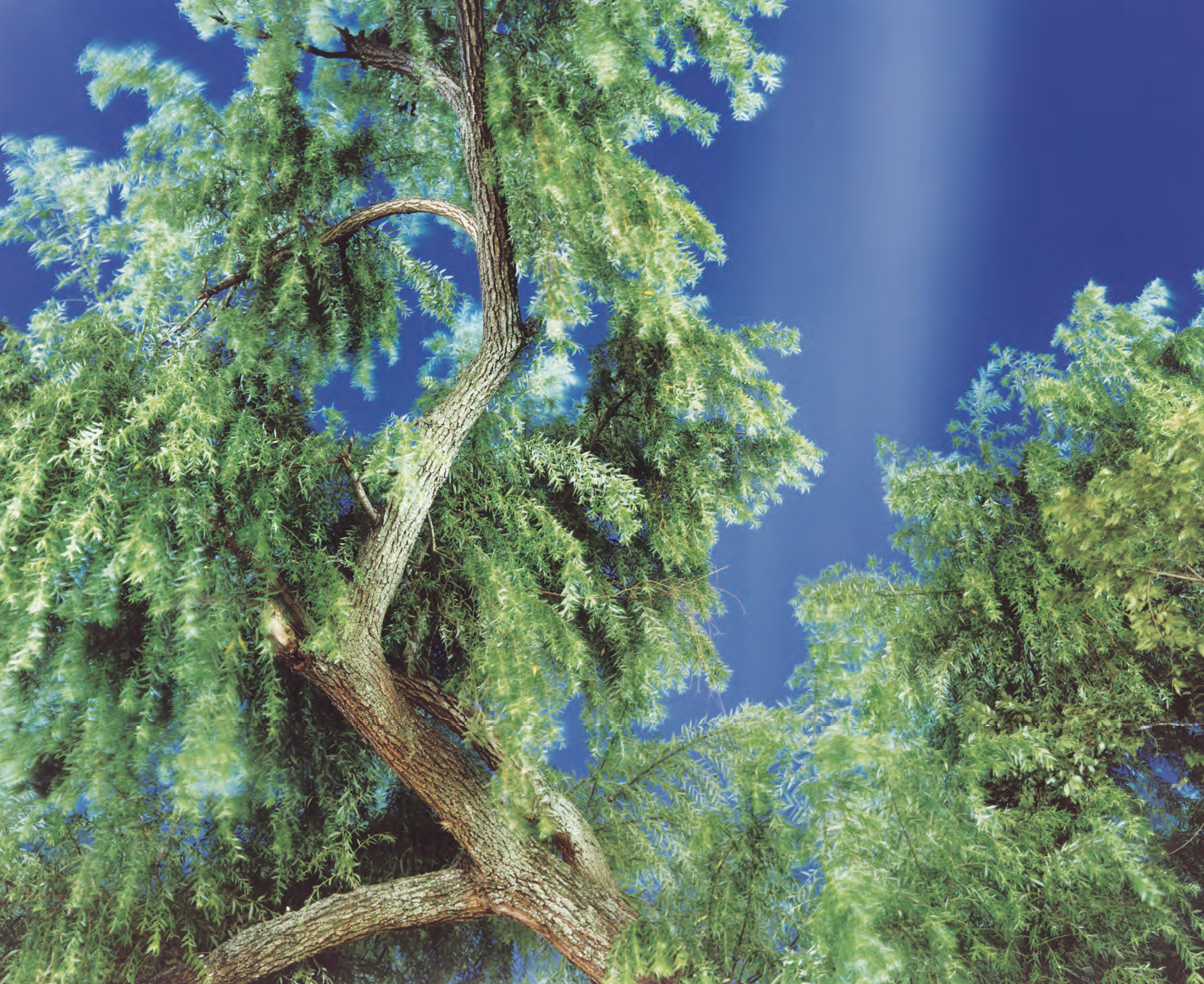
写真集『Remains』は、写真家・勝又公仁彦が、2005年8月、広島と長崎で被爆樹木と呼ばれる木々を夜の闇の中で撮影したシリーズである。
爆心地から約2キロ圏内で生き延びた木々は、今もなお原爆の痕跡をその身体に刻み込んでいる。
幹の一方には焼け焦げ、緊張した樹皮が残り、反対側ではそれを補うかのように膨張や傾きが生じている。
そこには、破壊を受けた後も生きる、時間を内包した形態がある。
木々のかすかな「呼吸」を捉えるため、撮影は夜に行われ、単なる記念碑でも象徴でもなく、いまなお戦争を内在させた存在として被爆樹木が写されている。
「Remains」とは、残骸ではなく、原爆がこの世界に残し続けているものの総体を指す。
本書は、終わったはずの戦争が、いまだ生の内部で続いていることを静かに示し、生きているもののための鎮魂として、わたしたちの現在を問い返す。
寄稿:: 伊藤俊治、鈴木雅和
“被爆樹木の中でも戦争は終わっていない。
── 伊藤俊治
それは痕跡や記憶にもなれず、今も生身に起こっている現実である。
「REMAINS」はその生きている見えない戦争の様を写し出す。
それらの写真を見ていると、実は樹木ではなく、世界の方が朽ち、 ゆっくり消えてゆくように思えてくる。”
“被爆建物と被爆木、どちらも被爆遺産であるが決定的な違いは、被爆木は生き物であるということ。
──── 鈴木雅和
被爆の傷跡を残しながら、これまで生き続けてきて同じ時間を過ごしている。
その自己修復力に気づけられた被爆者も多い。
被爆建造物は被爆時点で時間が凍結しており、破壊と軍事を象徴するものであるのに対し、
被爆樹木は生命と再生・復活という未来への願いを人々に感じさせる。
Remains
Kunihiko Katsumata
The trees that survived within a two-kilometer radius of the hypocenter of the atomic bombing of Hiroshima are officially registered as hibaku jumoku (atomic bomb survivor trees). As of March 2025, 159 survivor trees have been identified, and fifty are also registered in Nagasaki. The trees are living witnesses that convey the bitter tragedy of the atomic bombing. Now, eighty years later, many are damaged, decayed, or fallen, and so the second- and third-generation saplings grown from them are being distributed and raised as symbols of peace throughout Japan.
Kunihiko Katsumata’s Remains is a photographic series of trees that survived the atomic bombings in Hiroshima and Nagasaki, which he photographed through the night on August 6 and August 9, 2005. A few additional photographs were taken on August 11 and August 12.
Looking closely at the surviving trees, one can see the faint traces of the atomic bombing that remain. They are marks left on trees struck by the violent blast of the bomb that endured the devastation it wrought and remained standing firm. Damage on the trees is particularly evident on the sides of the trunks facing the hypocenter where the bark is taut, like skin scarred by fire. Black scorch marks and fissures in the bark caused by thermal rays that reached several thousand degrees Celsius can be seen here and there. Conversely, the sides of the trunks and roots that faced away from the hypocenter are swollen and enlarged. This growth pattern presumably developed as a mechanism to compensate for the damage on the side facing the hypocenter. Some tree trunks lean away from the hypocenter, revealing the extraordinary load placed on the trees’ growth dynamics, morphology, and direction of growth. The intense heat and fires burned the bark and internal tissues of some trees, creating cavities in their trunks. The above- ground portion of other trees was completely burnt on the hypocenter side, but the roots survived, and these trees began to regrow from new shoots known as bikobae that emerge from the base or roots.
Burned and blackened long ago by a great fire, they continued to draw water from the earth, somehow managing to regenerate. Lying on the ground and gazing upward, Katsumata repeatedly photographed along the water veins of the trees. It was essential that the photographs convey an image of the life force rising from the brink of death.
Trees breathe and persist in life, just as people do. Katsumata chose to photograph at night in order to better perceive the soft breathing of the trees. Remains is truly a portrait of trees standing steadfast.
The title of Katsumata’s photographic series, Remains, does not denote a single object but rather the components and fragments left by the atomic bombs, or more broadly, to the totality of what they left behind over time.
Eighty years have passed since the war ended, and those born in the year of the atomic bombings are now eighty years old. Survivors of the atomic bombings and the war who were still alive at the time Katsumata photographed this series in 2005, have passed away one after another. Someday, survivor trees will outnumber the surviving atomic bomb victims, and in the end only the trees will remain. That quiet foreboding permeates Remains.
It was said that nothing would grow for seventy- five years, but in the stillness of the night Katsumata’s photographs capture the silent voices of trees that survived horrific violence and destruction, draw the water of life from the ravaged earth, and are still breathing, as human beings do.
Remains is a requiem not for human beings but for trees, not for the spirits of the dead but for living spirits.
Their spirits, too, must be elevated into ‘complete spirits.’ Katsumata does not say that photography can accomplish this. Nevertheless, the act and process of photographing as a means of soothing ‘incomplete spirits,’ may in some way bring peace to them.
The pain and suffering endured by the atomic bomb survivors were immeasurable. There are some who say the war is still being waged within them. If that is so, then the war has not ended for the survivor trees either. It has not become merely remaining traces or memories, but persists as a reality within the living trees. Remains depicts the manifestations of an invisible war that lives on. Looking at Katsumata’s photographs, one senses that is not the trees but the world itself that is decaying and slowly fading away.
This text is an edited and restructured excerpt from Toshiharu Ito’s contribution,
“Traces of the Trees of Life: Kunihiko Katsumata, Remains,”
Related Exhibitions
勝又 公仁彦 展「WAR REQUIEM II」
会期: 2025年12月2日(火)~12月20日(土)
時間:11:00~18:30
会場: IG Photo Gallery(東京都中央区銀座3-13-17 辰中ビル3F)
日・月・祝、休み

– – – – – – – – – – – – – – – – – – – – – – – – – – – – – – – – – – – – – – – – – – – – – – – – – – – – – – – – – – – – – – – – – –
勝又 公仁彦 展「Remains」
会期:2026年2月21日(土)〜3月22日(日)
時間:13:00〜19:00
休廊:月・火
会場:PURPLE(京都市中京区式阿弥町122-1 3F)
Artist Information
勝又 公仁彦
早稲田大学法学部卒業、インターメディウム研究所修了。多様な被写体のもとで「時間」「光」「場所」「空間」「認知」などをサブテーマに、常に写真の構造に触れる作品を展開。 日常の中に現象しながらも知覚されることの無かった世界を掬い取ることで、観る者を新たな認識へと誘うとともに、歴史・社会・文明への批評的な暗喩を込めた作品制作を続けている。
主な展覧会に「サイト―場所と光景:写真の現在 2」(東京国立近代美術館、2002年)「Natura Morta 」(Leica gallery Solms、2006年)「Dwelling」(世田谷美術館主催、2008年)「都市の無意識」(東京国立近代美術館、2013年)「あいちトリエンナーレ2016」(岡崎康生会場、「トランスディメンション ─イメージの未来形」、愛知、2016年)「写真都市展 ウィリアム・クラインと22世紀を生きる写真家たち」(21_21 DESIGN SIGHT、2018年)など。
主な受賞に、「さがみはら写真新人奨励賞」(2001年)、「日本写真協会新人賞」(2005年)。 東京国立近代美術館、世田谷美術館、沖縄県立博物館・美術館など国内外の主要なコレクションに作品が収蔵されている。
京都芸術大学教授。多摩美術大学非常勤講師。
Kunihiko Katsumata
Graduated from the Faculty of Law at Waseda University and completed the Inter-Medium Institute. Working across a wide range of subjects, his photographic practice consistently engages with the structural conditions of photography itself, taking time, light, place, space, and perception as recurring sub-themes. By carefully drawing out phenomena that emerge within everyday life yet often remain unperceived, his works invite viewers toward new modes of recognition while embedding critical metaphors that reflect on history, society, and civilization.
His major exhibitions include Photography Today 2: Site / Sight (The National Museum of Modern Art, Tokyo, 2002), Natura Morta (Leica Gallery Solms, Germany, 2006), Dwelling (organized by Setagaya Art Museum, Tokyo, 2008), Unconsciousness of the City (The National Museum of Modern Art, Tokyo, 2013), Aichi Triennale 2016 (Okazaki venue, Trans-Dimension: The Future of Images, Aichi, 2016), and Photo City Exhibition: William Klein and Photographers Living Toward the 22nd Century (21_21 DESIGN SIGHT, Tokyo, 2018), among others.
He has received the Sagamihara Newcomer Photographer Prize (2001) and the New Face Award of the Japan Photographic Society (2005). His works are held in major public collections in Japan and abroad, including The National Museum of Modern Art, Tokyo; Setagaya Art Museum; and the Okinawa Prefectural Museum & Art Museum.
He is a Professor at Kyoto University of the Arts and a part-time lecturer at Tama Art University.