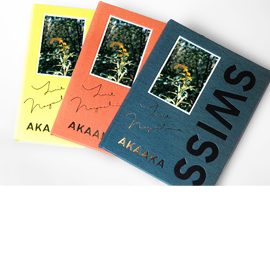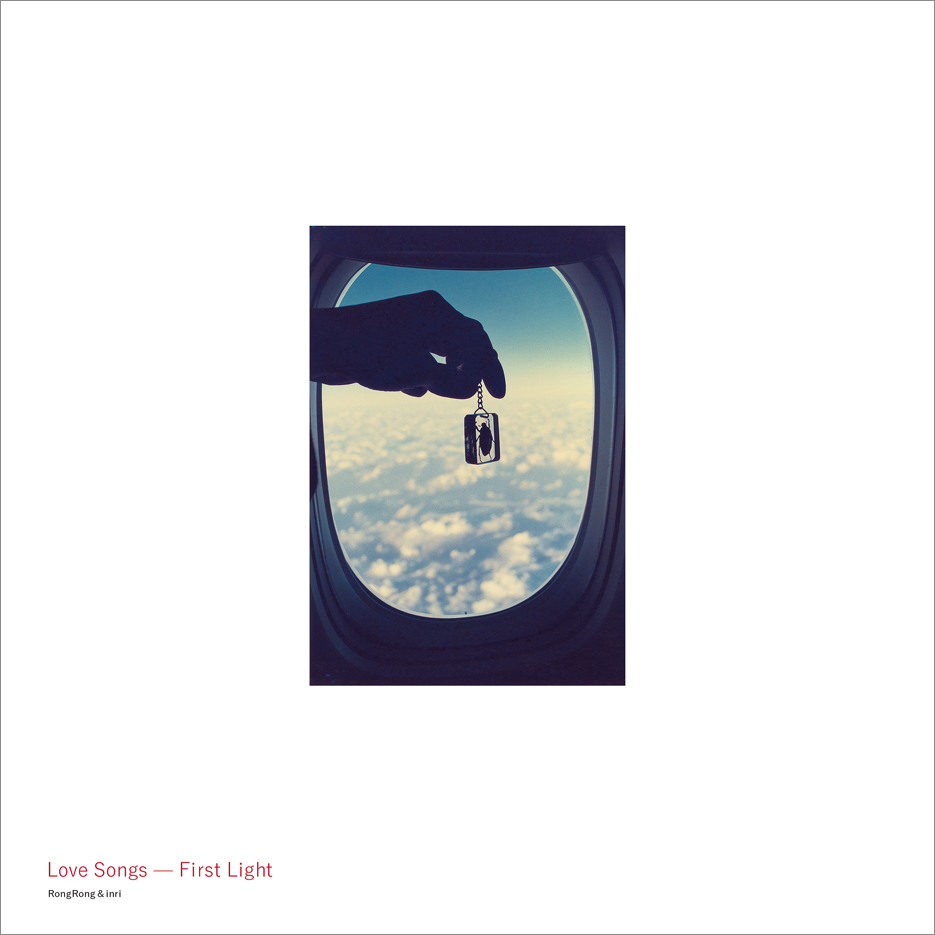
榮榮&映里『Love Songs — 始まりの光』
Book Design:町口覚、宮一紀(MATCH and Company Co., Ltd.)
発行:赤々舎
Size:H240mm × W240mm
Page:104 pages
Binding:Softcover, Smyth-sewn
Published in April 2026
ISBN:978-4-86541-227-7
¥ 4,000+tax
国内送料無料!
About Book
言葉をもたないまま、写真で愛を交わした二人の、はじまりの記録
中国と日本、それぞれの場所で活動していた二人の写真家、榮榮(ロンロン)と映里(インリ)。
1999年、東京で出会った二人は、言葉を共有できないまま、写真を送り合うことで関係を深めていきます。
本書『Love Songs』は、そのやりとりの軌跡を、写真と現在も残る手紙によって編み上げた一冊です。
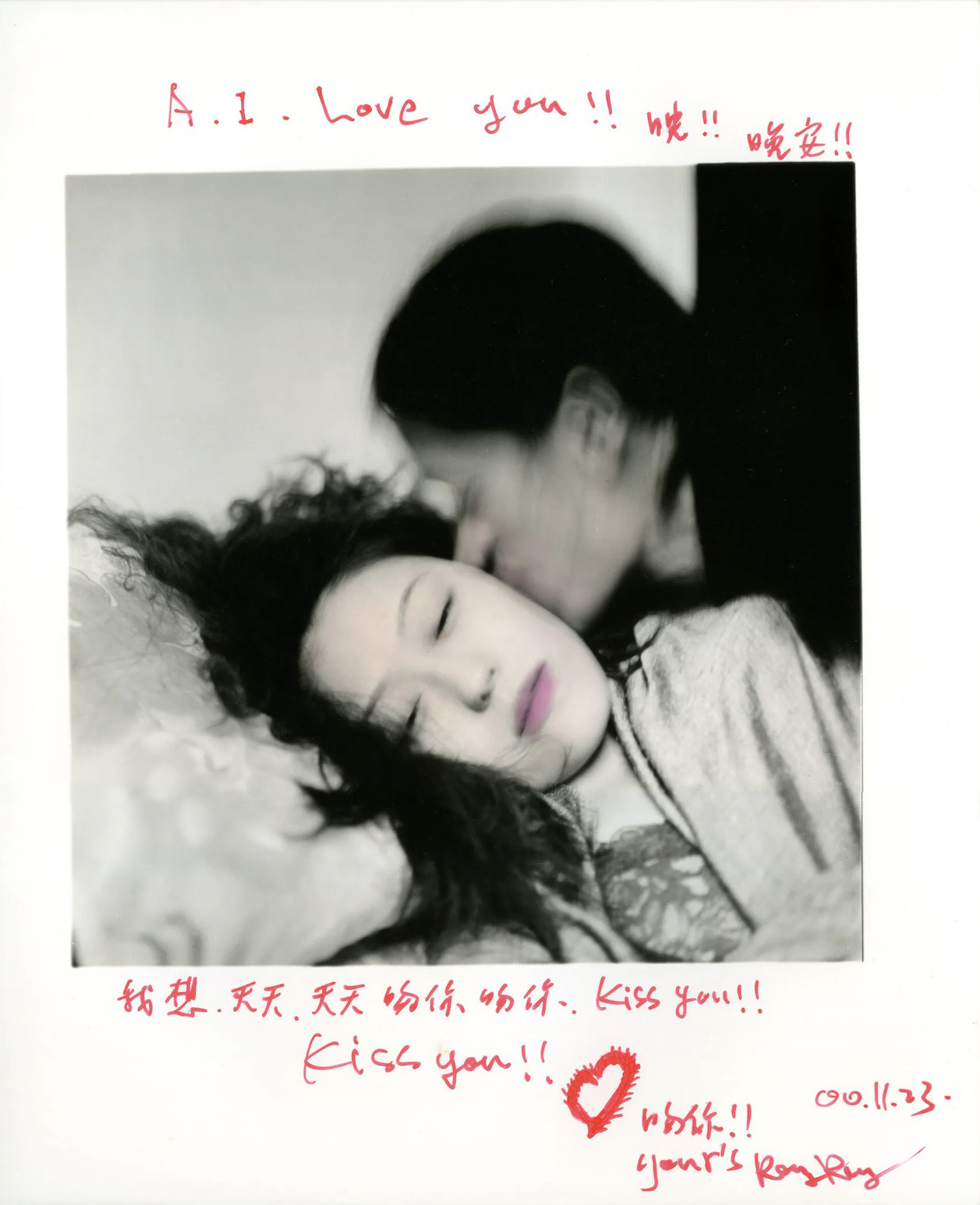
互いに送られた写真の周囲には、中国語、日本語、英語で断片的な言葉が書き込まれています。それらは相手へのメッセージであると同時に、言語や国境を越えてつながろうとする、自らへの誓いのようにも響きます。
二人のあいだで交わされたのは、写真だけではありませんでした。
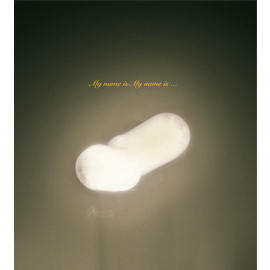
初めての出会いのあと、映里が榮榮に手渡した小さな贈り物——ガラスの中に封じ込められた黄金虫のキーホルダー。
そのささやかな光を宿した存在は、これから始まる往復のやりとりを予感させる、ひとつの起点のようでもありました。
2022年には、パリのヨーロッパ写真美術館にて開催された展覧会「Love Songs: Photography and Intimacy」において、本シリーズ〈Personal Letters〉が初めて公開されました。本書には当時ディレクターを務めたサイモン・ベーカーによる寄稿も収録されています。
きわめて個人的な往復から生まれたこの作品は、人と人が出会うこと、そして写真というメディアがどのように存在しうるのかを、静かに、しかし深く問いかけます。
それは、二人のあいだで始まったひとつの「歌」が、やがて世界へとひらかれていく、そのはじまりの記録でもあります。
そしてこの出会いは、やがて二人の名前がひとつになる、その創作のはじまりでもありました。
“この作品は、コラボレーションを表現の中核的実践とする完全な意味での「芸術作品」であると同時に、私的な意思疎通における障壁を乗り越えるために必要な実践としても理解されねばならない。愛や願望を伝え合う手書きの文字(制作完了後に加筆されたもの)は、一種のサブテキスト(言外の意味)やサーテキスト(表面上の意味)となっているが、視覚的コンテンツもまた、それ自体で愛に関する一連のステートメントであり、二人で一緒に、また離れて別々に共同制作したものだ。榮榮&映里が新たに共有した写真という言語を通じて表現することができると考えたコンテンツの一例である。「Personal Letters」という作品は、奇しくもきわめて予言的な形で、スタイルと内容の両面から、もはや榮榮と映里という個別の存在ではない、「榮榮&映里」というデュオの時代の始まりを告げている。”
── サイモン・ベーカー
Love Songs — First Light
RongRong&inri
The photobook, ‘Love Songs — First Light’ , brings together the earliest “photographic letters” exchanged between the two artists from 1999 to 2000, selected from the larger “Personal Letters” series.
It consists of a number of hand-made, sometimes also hand-coloured, black-and-white photographic prints depicting either RongRong or inri, surrounded by messages in either/or both, Chinese characters and/or, English, from one to the other; as well as several images from the same time of the couple together.
‘Personal Letters’ was first shown at the MEP in 2022 as part of the collective exhibition Love Songs: Photography and Intimacy, more than 20 years after it was made.
The concept for the show was as follows: what if, rather than thinking about photography being an objective medium best suited to recording things, events, stories or indeed people, from an external or neutral perspective; what if we looked only at photographic works made within relationships, with all their radical subjective potential; that is to say made about, and with, love.
The story that accompanied their presentation is as follows: RongRong and inri first met in Japan in the year 1999, and fell in love, (they are still in love), but shared no common
language. RongRong, who is Chinese, could not speak Japanese (although now he can, if only a little). inri, who is Japanese, could not speak Mandarin (although now she can). What is less easy to understand for non-Mandarin and Japanese speakers is the fact that although both languages are entirely different when spoken, they can be expressed, when written, in the same characters.
This fact of language meant that as they exchanged their first love letters, RongRong and inri could read and write what they couldn’t necessarily say, or speak as easily: a reversal of the convention that the spoken word is somehow more ‘direct’ than the written one.
Today RongRong&inri live and work as a single entity, which is to say, their love story had the happiest of ever-after endings both personally and professionally. But prior to their meeting and their first exchange of letters, and their decision to work only together, they followed individual creative paths.
RongRong was perhaps best-known for his work in what is known as the East Village, a community of artists working in Beijing in the early 1990s.
Inri as a young artist in the 1990s was also aware of the power of performance and the use of the body through a deep knowledge of the Japanese post-war avant-gardes.
Working together in RongRong’s hometown of Beijing, and then separately, while apart in China and Japan, RongRong&inri produced ‘Personal Letters’ in a way that spoke to both contexts: uniting elements of physical performance, emotive portraiture, and site-specific photography. The series is perhaps unique or at least incredibly unusual, therefore, in having been co-authored not only by both artists, but also by both subjects, working together (even when physically apart).
For although RongRong&inri kept this visual and textual correspondence private for so many years, ‘Personal Letters’ also marks a decision to make work together as a duo, and as such has to be understood as having been ‘art work’ in the fullest sense, with collaboration as core practice, at the same time as a necessary exercise in over-coming a barrier in private communication. And while the hand-written texts, with their declarations of love and hope,form a kind of sub-text or sur-text, (having been added to the images after their production), the visual content is also, itself, a series of statements about love, co-authored, together and apart, as an example of what RongRong&inri thought it possible to express through their new, shared, photographic language. In a strange, deeply prophetic way, ‘Personal Letters’, in both style and substance, inaugurates
the time when there would no longer be RongRong and inri, but instead RongRong&inri.
Looking again at ‘Personal Letters’ for the moment of their publication, and in the knowledge of their incredible public reception during Love Songs, I am once again struck by their deeply unusual honesty and sincerity as the basis of their power. As a form of communication initially shared between lovers, they nevertheless have an uncanny ability to speak to viewers as declarations, not only of love, but of unity and shared purpose. Love is supposedly a ‘universal’ concept, which has run through literature, music and art for thousands of years. But is it significant that very often, in photography and elsewhere, it slips too easily into cliché and sentimentality. But the works in Love Songs, and none more so than RongRong&inri’s ‘Personal Letters’, forged thoughtfully and consciously in moments of separation and longing, as well as hope and joy, share truths that, while harder to understand, are so much deeper as a result.
Excerpt edited from a contribution by Simon Baker
“These private letters, first gathered in 2022 under the title Personal Letters, have now become a book.
We receive this with deep emotion.
Once again, our love for photography—and our sense of awe before it—has grown deeper.
Nearly two hundred years have passed since photography was born.
For a quarter of a century, we have been under its spell.
Most likely, we will remain with photography for the rest of our lives.“
Excerpt from the afterword by RongRong&inri
.
Related Exhibition
榮榮&映里 出版記念作品展
「Love Songs — 始まりの光」
会期:2026年4月13日(月)〜5月31日(日)
時間:13:00〜19:00
会場:京都三影堂 (京都市京都府中京区柳馬場通二条下ル等持寺町27)
入場無料
不定休のため、ご来店前に Instagram @kyoto_saneido をご確認ください。
Artist Information
榮榮&映里
榮榮と映里によるアーティストデュオ。2000年より共同で制作を行い、人と自然との関係性を自身の身体を媒体として表現した作品や、生活を通して中国の社会的現実を捉えた作品などを発表。代表作に『富士山、日本、2001年』や『六里屯、北京』(1996~2003)、『妻有物語』(2012~2014)などがある。
2007年、北京・草場地芸術区に「三影堂撮影芸術中心(Three Shadows Photography Art Centre)」を設立。2009年からは、中国の若手写真家を発掘・支援するための「三影堂撮影賞/ Three Shadows Photography Award / TSPA)」を主催。2015年には、アルル国際写真フェスティバルと正式提携した国際写真祭「ジメイ×アルル国際摂影季」を立ち上げる。
主な展覧会に「大地の芸術祭越後妻有アー トトリエンナーレ 2012」(新潟、2012年)、「写真のエステー五つのエレメント」(東京都写真美術館、2013年)、 「LOVE展:アートにみる愛のかたちシャガールから草間彌生、初音ミクまで」(森美術館、2013年)、「即非京都」 (KYOTOGRAPHIE 京都国際写真祭、2021年)、「Love Songs」(MEP、2022年/ICP 2023年)など。近年では、M+(香港)、ハウス・デア・クンスト(ミュンヘン)、テート・モダン(ロンドン)、ハーシュホーン美術館(ワシントンD.C.)、ヨーロッパ写真美術館(パリ)、国際写真センター(ニューヨーク)、ハイ美術館(アトランタ)など、世界各地の美術館で広く作品が紹介・収蔵されている。
2022年、日本写真協会賞国際賞 受賞。現在、京都を拠点に活動を展開している。
RongRong&inri
RongRong and inri started collaborating as the artist duo “RongRong&inri” in Beijing in 2000. They have presented works that express the relationship between humans and nature using their own bodies as a medium, as well as works that capture the social reality of China through their daily lives.
Their major works include “In Fujisan, Japan, 2001,” “Liulitun, Beijing” (1996–2003), and “Tsumari Story” (2012–2014). In 2007, they established the “Three Shadows Photography Art Centre” in the Caochangdi Art District of Beijing. Since 2009, they have organized the “Three Shadows Photography Award (TSPA)” to discover and support emerging photographers in China. In 2015, they launched the “Jimei × Arles International Photo Festival” under the official partnership with the Rencontres d’Arles.
Major exhibitions include “Love Songs” (MEP, Paris, 2022; ICP, New York, 2023) , “Trace: The Photographic Journey of RongRong&inri” (Chengdu Contemporary Image Museum, China, 2021), “Jifei Kyoto” (KYOTOGRAPHIE International Photography Festival, Kyoto, Japan, 2021), “All You Need Is LOVE: From Chagall to Kusama and Hatsune Miku” (Mori Art Museum, Tokyo, 2013), “The Aesthetics of Photography–Five Elements” (Tokyo Metropolitan Museum of Photography, 2013), and “Echigo-Tsumari Art Triennale 2012” (Niigata, Japan, 2012). In recent years, their work has been exhibited and collected by major museums around the world, including M+ (Hong Kong), Haus der Kunst (Munich), Tate Modern (London), Hirshhorn Museum (Washington, D.C.), Maison Européenne de la Photographie (Paris), International Center of Photography (New York), and the High Museum of Art (Atlanta).
RongRong&inri received the Photography Society of Japan Awards – International Award in 2022. They are currently based in Kyoto.